
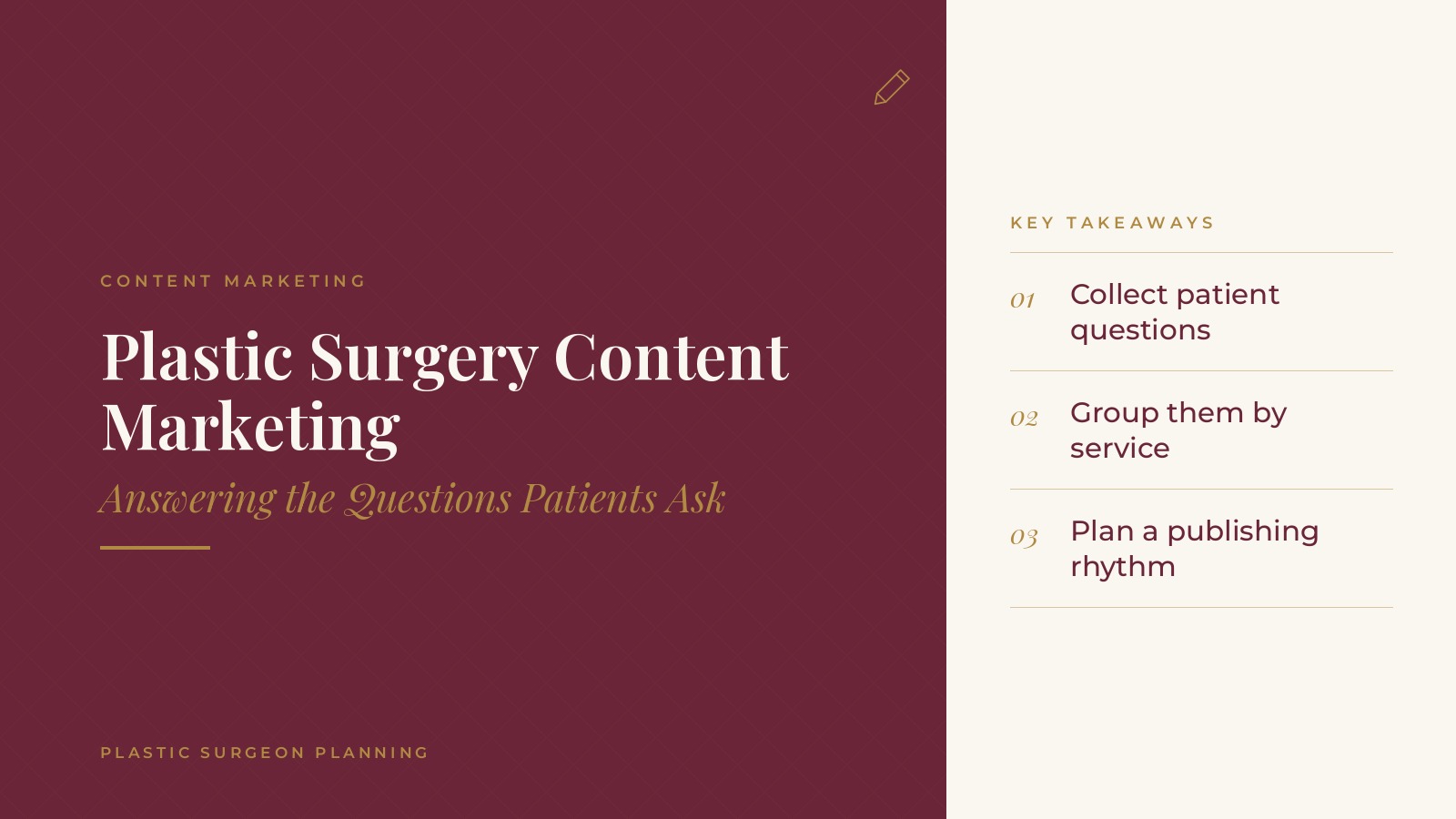
Plastic Surgery Content Marketing: Answering the Questions Patients Ask
Plastic surgery content marketing is the practice of publishing helpful pages, articles and guides that answer the questions prospective patients ask before they book a consultation. Good content explains procedures, recovery topics and the visit process in clear, patient-friendly language. In short, plastic surgery content marketing starts with a list of real patient questions, groups them by service, assigns each to a page or article and publishes on a steady schedule with surgeon review. Reviewing visits and inquiries each month shows which topics deserve more attention. This resource from Plastic Surgeon Planning explains how practices collect questions, plan topics, choose formats, handle surgeon review and measure results, along with the questions practices bring to a marketing professional.
Key takeaways
- Collect the questions patients actually ask.
- Group topics by service line.
- Choose a format for each topic.
- Have the surgeon review every page.
- Publish on a steady, realistic schedule.
Why plastic surgery content marketing works
Patients research before they call
People considering a procedure often spend weeks reading before they contact a practice. Pages that answer their questions clearly keep the practice in front of them during that research period.
Content supports every channel
A well-written service page can be found through search, linked from social posts, shared in email and used by the front desk to answer common questions. One piece of content works in several places.
Search engines reward helpful pages
Pages that cover a topic fully, in plain language, tend to match what searchers are looking for. The guide to plastic surgery SEO explains how content connects to a wider search plan.
Finding the questions patients ask
Start with the front desk
The people who answer the phone hear the same questions daily. A shared list of those questions, kept by the front desk and reviewed monthly, is a practical source of topics.
Look at the consultation conversation
Surgeons and coordinators also know which questions come up in consultations: how a procedure is planned, what the visit day looks like and how recovery is approached. Many practices ask for a short list of the most common ones.
Check search suggestions
Typing a procedure name into a search box shows related questions people type. These suggestions help phrase headings the way patients phrase them. The guide to plastic surgeon near me SEO covers local searches.
Plastic Surgeon Planning can introduce you to independent digital marketing and SEO professionals who work with plastic surgery practices on content planning, procedure page structure and publishing calendars. To request an introduction, contact us or call or text (972) 616-4581. You can also read about SEO for plastic surgeons.
Planning topics and formats
Group by service line
Organizing topics under breast, face, body and non-surgical services keeps the plan balanced and helps each service page gather related articles around it.
Choose the right format
Some questions suit a short answer, such as a frequently asked question section. Others deserve a full guide or a comparison table. A mix of formats keeps the site useful and varied.
Build a simple calendar
A realistic schedule, such as two or four new pieces a month, is better than an ambitious plan that stalls. The guide to plastic surgery lead generation explains how content connects to inquiries.
Link pages together
Each new article can link to the matching service page and to related guides, which helps visitors find more and helps search engines understand the site.
Review, publishing and upkeep
Surgeon review
Every page that describes a procedure benefits from a read by the surgeon before publishing. A short checklist, covering accuracy, tone and wording, keeps the process quick.
Plain language
Clear wording with short sentences and defined terms makes pages easier to read on a phone. Many practices read pages aloud to catch awkward phrases.
Refresh older pages
Procedures, techniques and practice details change. A twice-yearly review of the highest-traffic pages keeps them accurate. The guide to plastic surgery website design covers how pages are laid out for readers.
Content formats plastic surgery practices commonly use
Service pages
A service page explains one procedure or treatment area: what it is, who it is for, what the consultation covers and what the next step is. It is usually the anchor for related articles.
Frequently asked question pages
Short questions and answers suit topics that patients ask repeatedly, such as how to prepare for a consultation or what the office visit looks like.
Educational guides
Longer guides explain a topic in depth, with headings, a short summary and links to related pages. They work well for searchers who want a full picture.
Newsletters and social posts
Short messages that point back to full pages keep the practice visible between visits. Each piece should link to a page that answers the question in full.
Putting a content plan together
Gather the inputs
Collect the list of patient questions, the practice's service lines, the current pages and the people who will write and review. Having these in one folder makes planning conversations faster and clearer.
Assign roles
Name one person to manage the calendar, one to coordinate surgeon review and one to be the contact for the marketing professional. Clear roles prevent delays.
Write the first quarter
A one-page calendar listing topics, formats, owners and publish dates for the first three months keeps everyone aligned. Share it with the whole team and update it as plans change.
Plan for upkeep
Set aside time each quarter to update older pages, add new questions to the list and drop topics that no longer fit. Content that stays current keeps serving visitors long after the first publish date.
Measuring content and working with a professional
Simple measures
Many practices track visits to each page, time on page, form submissions and calls that begin on content pages. Comparing these numbers each month shows which topics bring in inquiries.
Questions to ask a marketing professional
- How will topics be chosen and who approves the list?
- What formats will be used for each type of question?
- How will surgeon review fit the schedule?
- Which numbers will appear in the monthly report?
- Who keeps the accounts and the content archive?
Keep accounts in the practice's name
Many practices ask that the website, analytics and listing accounts stay under the practice's own login, with the marketing professional added as a user. That keeps the content and history with the practice.
Frequently asked questions
What is plastic surgery content marketing?
It is the practice of publishing helpful pages and articles that answer the questions prospective patients ask before booking a consultation.
How do practices find topics?
Many start with questions the front desk hears, questions raised in consultations and related searches shown in search suggestions.
How often should a practice publish?
Practices commonly choose a realistic rhythm, such as two to four pieces a month, and keep it steady over time.
Who reviews the content?
The surgeon usually reviews procedure pages for accuracy and tone, while a marketing professional or the practice administrator handles planning and publishing.
How is content measured?
Common measures include page visits, form submissions, calls from content pages and scheduled consultations, reviewed on the same day each month.
Request an introduction
Plastic Surgeon Planning can introduce you to independent digital marketing and SEO professionals who work with plastic surgery practices on content planning and publishing calendars. Learn more about SEO for plastic surgeons, then take the short Plastic Surgeons SEO survey and request an introduction. You can also call or text (972) 616-4581, or contact us. The form goes to [email protected].



