
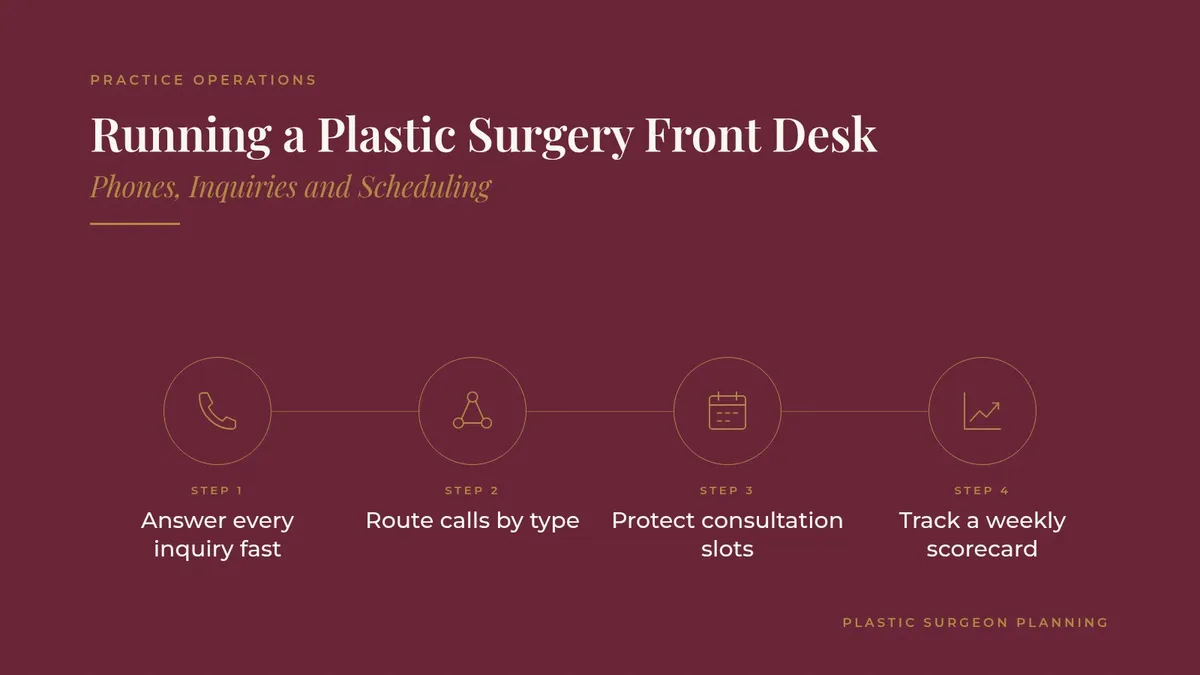
Running a Plastic Surgery Front Desk: Phones, Inquiries and Scheduling
The plastic surgery front desk is where most patients form their first real impression of a practice. A prospective patient may have spent weeks reading about a procedure, comparing surgeons and looking at galleries, and then the first human contact is a phone call, a text or a web form reply. How that moment goes shapes whether they book a consultation, and how the desk handles the many calls that follow shapes how they feel about the whole experience.
Cosmetic practices face a different mix than most specialties. The desk handles new inquiries about elective procedures, post-op patients with questions, injectable and skin care visits, and surgery scheduling, often all in the same hour. This guide covers the operational basics: phone coverage, inquiry routing, consultation scheduling, staffing and the simple measures that show whether the desk is working.
Key takeaways
Answer new inquiries quickly and consistently, by phone, text and web form.
Separate new-patient calls from post-op and existing-patient calls.
Use consultation templates that fit each procedure type.
Train staff with simple scripts and clear handoffs to coordinators.
Track a few front desk numbers weekly and adjust.
Why the plastic surgery front desk matters
First contact sets the tone
Cosmetic patients are often nervous about calling. They may be unsure whether they are a candidate or worried about being judged. A warm, unhurried voice that knows the basics of each procedure, and knows when to hand off to a coordinator, makes a big difference to how comfortable they feel.
The desk carries many jobs at once
In a busy aesthetic practice, the same team may check in injectable patients, answer the phones, confirm tomorrow's schedule and respond to web leads. Without clear priorities, new inquiries slip to the bottom of the pile, and those are the calls that are hardest to win back.
Phone coverage and call handling
Cover the busy hours
Look at when calls actually arrive. Many practices see spikes early in the morning, at lunch and right after work. Staff those windows fully and stagger breaks so the phones are never left to voicemail during peak times.
Route calls by type
A modern phone system can route callers with a short menu: new patients, existing patients, post-op questions and appointment changes. New-patient calls should ring the people best trained to handle them first. Post-op calls should reach clinical staff quickly. The goal is fewer transfers and less time on hold.
Make voicemail a backup, not a plan
If a call does go to voicemail, the greeting should say when the caller will hear back, and someone should own the callback list. Set a clear standard, such as returning every new-patient message within the same business day.
Handling web inquiries and texts
Treat every channel as a front door
Many cosmetic patients prefer to start with a web form, a chat widget or a text message. These inquiries deserve the same speed and care as a phone call. Assign one person per shift to own the inquiry queue.
Reply fast, then personally
An automated confirmation tells the patient the message arrived. A personal reply from a named staff member, ideally within the hour during business hours, starts the real conversation.
Ask the right first questions
A short, friendly set of questions helps route the inquiry: which procedure they are interested in, whether they have had a consultation elsewhere, and their preferred way to be contacted. Avoid long forms that feel like a test. The article on plastic surgery website design that books consultations covers how the site's forms and calls to action fit into this flow.
Scheduling consultations and procedures
Build templates by visit type
A breast augmentation consultation, a facelift consultation and a filler appointment need very different amounts of time and different staff. Build schedule templates with set blocks for each visit type so the desk is not guessing.
Protect consultation slots
Hold a predictable number of new-patient consultation slots each week. When those slots are buried under follow-ups, wait times for new patients stretch and interest cools.
Confirm and remind
Send reminders by text and email a few days before and again the day before each visit, with an easy way to confirm or reschedule. Keep a short list of patients who want an earlier slot, so a cancellation can be filled quickly.
Hand off to the patient coordinator
Once a patient has had a consultation, the patient coordinator usually takes over the surgery scheduling conversation. Make the handoff explicit: who owns the follow-up, by when, and where notes live in the practice management system.
Staffing and training the desk
Hire for warmth and calm
Procedure knowledge can be taught. A calm, friendly manner under pressure is harder to train. During interviews, try a short role-play of a nervous first-time caller.
Give staff simple scripts
Scripts should guide, not lock staff into a speech. Cover the greeting, the first questions for a new inquiry, how to describe the consultation, and when to bring in a coordinator or nurse. Review and update them every few months.
Cross-train for coverage
At least two people should know each core task: phones, check-in, inquiry replies and confirmations. Cross-training keeps the desk running smoothly during vacations and sick days.
Hold short daily huddles
A five-minute huddle before the first patient covers the day's schedule, any VIP or anxious patients, open callbacks and who is covering the inquiry queue.
Front desk technology that helps
Phones and VoIP
A cloud phone system can offer call routing, text messaging and reporting in one place. Look for clear reporting on missed calls and hold times.
Practice management and CRM
A CRM or practice management system that logs every inquiry, call and follow-up helps the team see which patients are waiting for a reply. Simple dashboards keep everyone looking at the same list.
AI tools with a human in the loop
AI tools can help draft replies, summarize calls or suggest follow-up times. Staff should review anything before it goes to a patient, and the practice should decide which tasks stay fully human.
Measuring front desk performance
A short weekly scorecard
A few numbers, reviewed weekly, show whether the desk is on track:
Share of calls answered live during business hours.
Average time to reply to new web and text inquiries.
Number of new-patient consultations booked.
No-show and late cancellation counts for consultations.
Look for patterns, not blame
Use the numbers to adjust staffing, schedules and scripts, not to single people out. Patient feedback and online comments add useful context; the guide to plastic surgery reviews on Google and RealSelf shows how review themes can point to front desk fixes.
Frequently asked questions
How many front desk staff does a plastic surgery practice need?
It depends on call volume, the number of providers and how many nonsurgical visits the practice offers. Reviewing call and visit data by hour is a practical way to decide.
Should the front desk or a patient coordinator handle new inquiries?
Many practices have the front desk make first contact and book the consultation, then hand the patient to a coordinator. What matters most is a clear, written handoff.
How quickly should a practice reply to a web inquiry?
As quickly as possible during business hours. An automated confirmation followed by a personal reply within the hour is a common goal.
What should a front desk script include?
A warm greeting, a few first questions, a simple description of the consultation, how to schedule and when to bring in a coordinator or nurse.
Can AI tools answer patient calls?
Some practices use AI tools for after-hours messages or call summaries. Staff should review what the tools produce, and many practices keep new-patient conversations with people.
Request an introduction
Plastic Surgeon Planning can introduce you to independent professionals who work with plastic surgery practices on operations, staffing, phone systems and practice technology. Take the 2-minute Practice Check and request an introduction to an independent professional who fits your practice. You can also call or text (972) 616-4581, or contact us. The form goes to [email protected].