
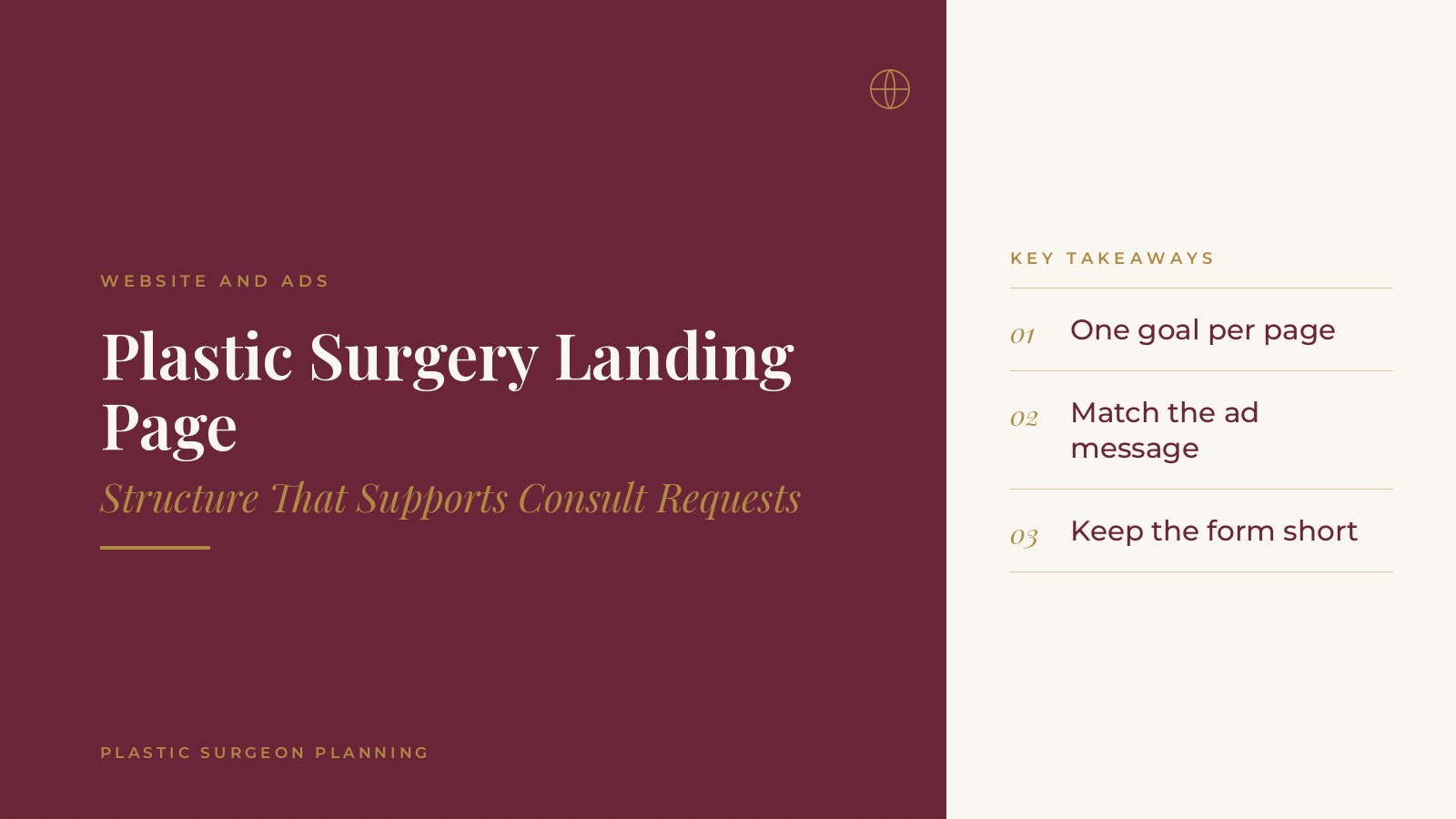
Plastic Surgery Landing Page | Structure That Supports Consult Requests
A plastic surgery landing page is a focused web page built for one procedure or campaign, where visitors arrive from an ad, email or social post and are invited to take one clear step, usually requesting a consult. Unlike a full website page, it keeps the message narrow and removes distractions.
In short, a plastic surgery landing page tends to work best when it has one goal, matches the message of the ad that sent the visitor, follows a simple section order, keeps the consult form short, loads quickly on phones and is improved through steady testing of one change at a time.
This resource from Plastic Surgeon Planning explains how landing pages differ from service pages, the sections many pages include, how forms and follow-up fit in, why speed matters and the questions practices often bring to a website and digital marketing professional.
Key takeaways
- Give each landing page one goal.
- Match the message of the ad or email.
- Keep the consult form short.
- Make the page fast on phones.
- Test one change at a time.
Why a plastic surgery landing page matters
Focus after the click
Someone who clicks an ad about a specific procedure expects to land on a page about that procedure. A general homepage asks them to search again, and many leave.
Clearer reporting
A dedicated page for each campaign makes it easier to see how many visitors became consult requests. The plastic surgery Google Ads guide explains how campaigns and landing pages are usually paired.
Room to test
Because a landing page has a single job, small changes to the headline, form or section order can be compared over time.
Landing pages versus service pages
Service pages explain
A procedure service page on the main website covers the topic in depth, links to related pages and is built to be found in search.
Landing pages focus
A landing page is usually shorter, has limited navigation and points every section toward one step, such as requesting a consult.
Using both
Many practices keep full service pages for search visitors and separate landing pages for paid campaigns, so each page can do its own job well.
Keeping pages organized
Landing pages are often kept out of the main navigation and given a clear naming pattern, so the team can find, update and archive old campaign pages without confusing visitors.
Plastic Surgeon Planning can introduce you to independent website and digital marketing professionals who work with plastic surgery practices on landing pages, ad campaigns and consult request forms. To request an introduction, contact us or call or text (972) 616-4581. You can also read about website design for plastic surgeons.
Sections many landing pages include
A clear headline
The headline names the procedure and echoes the ad wording, so visitors know they are in the right place.
A short overview
A few plain sentences describe what the procedure is in general terms, written for patients and reviewed by the surgeon.
The surgeon and practice
A brief surgeon introduction, credentials and the practice location help visitors understand who they would meet.
What a consult involves
Explaining how the consult works, how long it usually takes and what happens next answers common questions before the form.
FAQs and a repeat call to action
A few short questions and answers, followed by the form or a button again, give visitors a second chance to act.
The consult request form
Short and simple
Many practices ask only for a name, phone number, email, procedure of interest and preferred contact time, and leave health questions for the consult itself.
Clear next steps
A short line under the form explains when someone from the practice will reach out, which reduces repeat submissions and calls.
Fast follow-up
The speed of the first reply often matters as much as the page. The plastic surgery consultation conversion guide covers how coordinators usually handle new requests.
Keeping forms clean
Many practices keep advertising tags off inquiry forms and route form data straight to the practice's own secure systems.
A phone option
Some visitors prefer to call, so a tap to call number near the form gives them a second way to reach the practice.
Speed and mobile design
Most visitors arrive on phones
Ads on social platforms and search are often seen on phones, so the page layout, buttons and form are designed for small screens first.
Fast loading
Large images, heavy video and extra scripts can slow a page. A light page that loads in a few seconds keeps more visitors. The plastic surgery website speed guide covers common checks.
Easy tapping
Buttons sized for thumbs, a tap to call phone number and short form fields make it easier to act on a phone.
Testing and improving the page
One change at a time
Practices often test a single element, such as the headline or the form length, so the effect of that change is clear.
Enough time and traffic
A test usually runs long enough to collect a meaningful number of visits before any decision is made.
A simple test log
Recording each change, its start date and what happened helps the practice build on what works rather than repeating old tests.
What to watch
Common measures include the share of visitors who submit the form, how many submissions become booked consults and how quickly each request receives a reply. Reviewing these together shows whether a change helped or simply moved the numbers.
Questions practices bring to a website and digital marketing professional
Common planning questions
- Which procedures or campaigns need their own landing page?
- How closely does each page match the ad wording?
- Which fields does the consult form really need?
- How will consult requests from each page be tracked?
Connecting to the main site
Landing pages often share the look of the main website so visitors who explore further feel at home.
Keeping accounts in the practice's name
Many practices keep the website platform, ad accounts and analytics under practice logins, with outside professionals added as users.
Frequently asked questions
What is a plastic surgery landing page?
It is a focused web page for one procedure or campaign where visitors from an ad, email or social post are invited to request a consult.
How is a landing page different from a service page?
A service page explains a procedure in depth for search visitors, while a landing page is shorter and points every section toward one step.
What sections does a landing page usually include?
Common sections include a clear headline, a short overview, the surgeon and practice, what a consult involves, FAQs and a consult form.
How long should the consult form be?
Many practices ask only for contact details, the procedure of interest and a preferred contact time, leaving health questions for the consult.
How do practices improve landing pages?
Many test one change at a time, such as the headline or form length, and keep a simple log of each test and its outcome.
Request an introduction
Plastic Surgeon Planning can introduce you to independent website and digital marketing professionals who work with plastic surgery practices on landing pages, page testing and consult request flow. Learn more about website design for plastic surgeons, then take the short Plastic Surgeon Planning Plastic Surgeons - SEO survey and request an introduction. You can also call or text (972) 616-4581, or contact us. The form goes to [email protected].