Plastic Surgery Meta Ads | Planning Facebook and Instagram Campaigns
Plastic surgery Meta ads are paid campaigns that run on Facebook and Instagram to reach people in a practice's area who may be researching a procedure. Planned well, they introduce the practice, send interested people to a helpful page or a short inquiry form and give the team a steady flow of consult requests to follow up on.
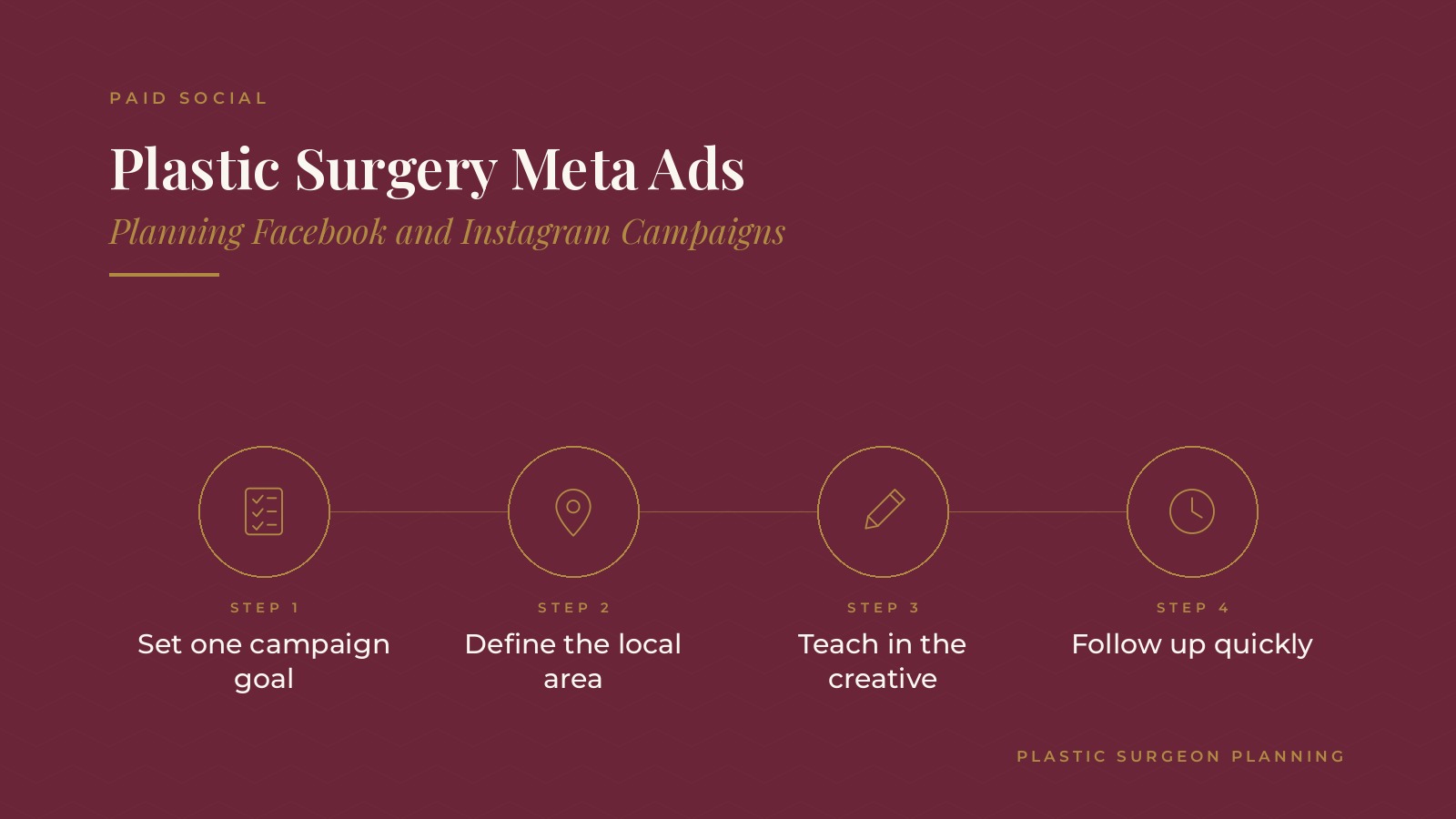
In short, plastic surgery Meta ads tend to work best when each campaign has one clear goal, a defined local area, creative that teaches rather than pressures, a short inquiry path, fast follow-up from the patient coordinator and reports that track inquiries all the way to consults.
This resource from Plastic Surgeon Planning explains campaign goals, audiences, creative, inquiry paths, follow-up, reporting and the questions practices often bring to a marketing professional.
Key takeaways
- Give each campaign one clear goal.
- Define the local area for audiences.
- Use creative that teaches.
- Follow up on inquiries quickly.
- Report inquiries through to consults.
How plastic surgery Meta ads fit a marketing plan
Reaching people early
Many people browse Facebook and Instagram long before they search for a surgeon by name. Paid posts can introduce the practice during that early research.
Working alongside search
Search ads and SEO reach people who are already looking. Meta campaigns tend to reach people who have not started searching yet, so the two often support each other.
Building on organic social
Ads usually work best when the practice's own pages already show steady, helpful posts. The plastic surgery Instagram marketing guide covers that organic side.
Setting campaign goals
One goal per campaign
A campaign built to collect inquiries is set up differently from one built to grow awareness or invite people to an event. Mixing goals tends to blur results.
Matching the goal to the procedure
Some procedures involve longer research periods than others. Many practices run awareness and education campaigns for those, and inquiry campaigns for services people decide on sooner.
A clear next step
Each ad usually points to one action, such as reading a procedure page, requesting a consult or joining an information evening.
Planning around the calendar
Some practices plan campaigns around their own calendar, such as open consult days or new team members joining, so the ads match what the front desk is ready to handle.
Plastic Surgeon Planning can introduce you to independent paid social and digital marketing professionals who work with plastic surgery practices on Meta ads, paid social planning and consult follow-up. To request an introduction, contact us or call or text (972) 616-4581. You can also read about social media marketing for plastic surgeons.
Audiences and location
A defined service area
Most practices focus on the cities, zip codes or drive time area they serve, rather than a wide region.
Broad interest groups
Meta lets campaigns reach people by general interests and age ranges. Many practices keep audiences broad and let the creative speak to the right people.
Past visitors and followers
Campaigns can also reach people who have visited the website or follow the practice pages. A marketing professional can explain which options fit the practice and its platforms.
Keeping sensitive data out
Many practices avoid uploading patient lists or sharing health details with ad platforms, and keep any website tracking away from inquiry and booking forms.
Creative that teaches
Graphics and short video
Clean graphics, short explainer videos and surgeon introductions are common choices. Many practices avoid patient images in ads entirely.
Plain, calm wording
Ads that describe what a procedure involves and invite questions tend to fit the practice better than urgent offers or bold promises.
Consistent branding
Using the same colors, fonts and tone as the website and social pages helps people recognize the practice when they visit later.
Rotating creative
Ads often lose attention after a few weeks. Planning several versions in advance keeps campaigns fresh without rushed changes.
Surgeon review
Many practices have the surgeon review every ad before it runs, so the wording about each procedure matches how the practice describes it in consults.
Inquiry paths and follow-up
Landing pages or instant forms
Ads can send people to a page on the practice website or open a short form inside the app. Each option has tradeoffs a marketing professional can walk through.
Short forms
Many practices ask only for a name, contact details and the procedure of interest, and leave health questions for the consult itself.
Speed matters
Inquiries tend to cool quickly. Many practices route new inquiries to the patient coordinator right away and set a target for first contact within the same business day.
Consistent replies
A short set of reply templates for calls, texts and emails helps the coordinator respond quickly with the same tone every time. The plastic surgery lead generation guide covers the wider inquiry process.
Reporting plastic surgery Meta ads results
Beyond clicks
Clicks and form fills show interest. Following each inquiry to a consult and a booked procedure shows which campaigns bring people who move forward.
Source on every inquiry
Recording the campaign source on each inquiry in the practice's own system makes that follow-through possible. The plastic surgery consult tracking guide explains common stages.
A steady review rhythm
Many practices review campaign reports monthly with their marketing professional and adjust creative and audiences based on consult results rather than clicks alone.
Questions practices bring to a marketing professional
Common planning questions
- Which procedures fit awareness campaigns, and which fit inquiry campaigns?
- How will audiences be set for the practice's service area?
- Which inquiry path fits the practice, a landing page or an instant form?
- How will inquiries be followed through to consults in reports?
Coordinating with the front desk
Many practices share the campaign calendar with the patient coordinator, so the team knows which offers or events people may ask about.
Keeping accounts in the practice's name
Many practices keep the ad account and business pages under practice accounts, with outside professionals added as users, so campaign history stays with the practice.
Frequently asked questions
What are plastic surgery Meta ads?
They are paid campaigns on Facebook and Instagram that reach people in a practice's area who may be researching a procedure.
Who do plastic surgery Meta ads reach?
Most practices focus on their service area and broad interest groups, plus people who have visited the website or follow the pages.
What creative works for plastic surgery ads?
Common choices include clean graphics, short explainer videos and surgeon introductions with plain, calm wording.
How fast should inquiries get a reply?
Many practices route new inquiries to the patient coordinator right away and aim for first contact the same business day.
How are Meta ad results measured?
Many practices follow each inquiry through to a consult and a booked procedure instead of judging campaigns by clicks alone.
Request an introduction
Plastic Surgeon Planning can introduce you to independent paid social and digital marketing professionals who work with plastic surgery practices on Meta ads, paid social campaigns and consult reporting. Learn more about social media marketing for plastic surgeons, then take the short Plastic Surgeon Planning Plastic Surgeons - SEO survey and request an introduction. You can also call or text (972) 616-4581, or contact us. The form goes to [email protected].