
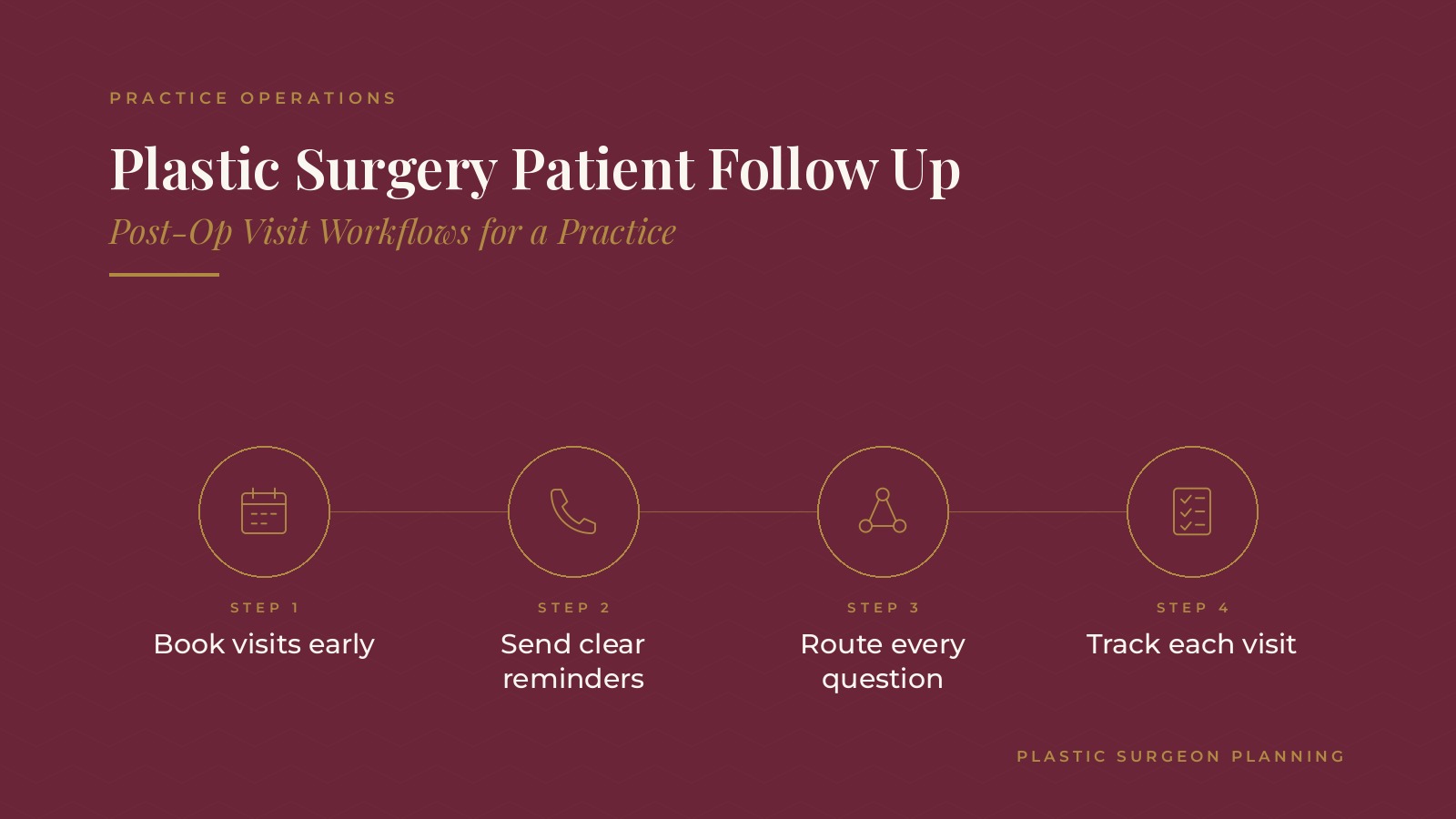
Plastic Surgery Patient Follow Up | Post-Op Visit Workflows for a Practice
Plastic surgery patient follow up is the set of office routines that keep post-op visits, check-in calls and patient questions organized after a procedure. It covers when follow-up visits are booked, how reminders are sent, who answers questions and how the practice confirms that every planned visit took place. In short, plastic surgery patient follow up runs most smoothly when the follow-up visit series is booked before surgery day, reminders go out for every visit, check-in calls follow the surgeon's schedule, patients have one clear path for questions and a coordinator tracks each visit until the series is complete. This resource from Plastic Surgeon Planning explains the usual parts of a follow-up workflow, the roles involved, how practices track visits and the questions practices often bring to a practice operations professional. Clinical decisions about follow-up timing and care always rest with the surgeon and clinical team.
Key takeaways
- Book the follow-up visit series before surgery day.
- Send a reminder for every planned visit.
- Schedule check-in calls on the surgeon's timeline.
- Give patients one clear path for questions.
- Track every visit until the series is complete.
What plastic surgery patient follow up covers
The office side of recovery
Follow-up includes planned post-op visits, scheduled check-in calls, answering questions and making sure each step happens on time. The surgeon and clinical team decide what each visit includes, and the office makes sure it is on the calendar.
Why a written workflow matters
When follow-up depends on memory, visits can slip during busy weeks. A written workflow gives coordinators, front desk staff and nurses the same plan for every patient.
Part of the whole patient journey
Follow-up is one stage of communication that starts at the first inquiry. The guide to plastic surgery patient communication covers how practices organize contact from consultation through recovery.
Booking the follow-up visit series early
Set the visits before surgery
Many practices book the full series of planned post-op visits when the surgery date is scheduled. Patients leave with the dates on their calendar, and the practice can hold the right slots on the surgeon's schedule.
Use visit templates by procedure
Each surgeon often has a standard follow-up timeline for each procedure. Saving those timelines as scheduling templates lets coordinators book the series quickly and consistently.
Adjust when plans change
If the surgery date moves, the coordinator moves the whole follow-up series with it, so no visit is left on the old timeline.
Plastic Surgeon Planning can introduce you to independent practice operations professionals who work with plastic surgery practices on post-op follow-up workflows, reminders and coordinator routines. To request an introduction, contact us or call or text (972) 616-4581. You can also read about plastic surgery practice operations.
Reminders and check-in calls
A reminder for every visit
Reminder messages a few days before and again the day before each follow-up visit help patients keep their appointments. The wording follows the practice's approved templates.
Check-in calls on a schedule
Many surgeons ask their teams to call patients at set points after surgery. Putting those calls on the coordinator's or nurse's task list, with a due date, keeps them from being missed.
Record each contact
A short note in the practice system after each call or message shows that the step happened and lets anyone on the team see where the patient is in the series.
A clear path for patient questions
One number for daytime questions
Patients do best with one phone number or line for questions after surgery, and that path is shared in the materials they receive before their procedure.
After-hours coverage
Calls outside office hours are routed to an answering service or on-call process the surgeon has set up. The guide to the plastic surgery answering service explains how practices commonly arrange that coverage.
Route clinical questions to clinical staff
Front desk staff take messages and pass clinical questions to the nurse or clinical team rather than answering them. A simple routing list shows who receives each type of message and how quickly it is returned.
Roles in the follow-up workflow
The patient coordinator
In many practices, the patient coordinator books the follow-up series, sends reminders and watches for missed visits.
Nurses and clinical staff
Nurses or medical assistants handle the clinical side of check-in calls and questions, following the surgeon's protocols.
The front desk
The front desk checks patients in for follow-up visits, reschedules when needed and makes sure each visit is marked complete in the system.
Shared visibility
Brief team huddles give each role a chance to flag patients who missed a visit or need an extra call.
Tracking every visit
A simple follow-up list
Many practices keep a list or report of every patient in an active follow-up series, with the next planned visit or call and its due date. Coordinators review it each morning.
Missed visits
When a patient misses a follow-up visit, the workflow names who calls to reschedule and how soon. A second missed visit is usually flagged to the clinical team.
Closing the series
When the last planned visit is complete, the coordinator marks the series closed. That clear end point keeps the active list accurate.
Patients who travel for surgery
Some patients travel from another city for their procedure. Many practices note travel plans when the series is booked, so early visits are scheduled before the patient heads home and later check-ins are arranged in the way the surgeon prefers, such as a video visit or a call with the nurse.
Reviewing the workflow and questions to ask
Simple measures
Many practices review the share of planned follow-up visits that were kept, how often check-in calls happened on time and how quickly patient messages were returned. Trends over several months are more useful than single weeks.
Planning questions
- Are follow-up visits booked when the surgery date is set?
- Does each surgeon have saved follow-up templates by procedure?
- Who owns reminders, check-in calls and missed-visit outreach?
- How do patients reach the practice with questions, day and night?
- How is each follow-up series tracked and closed?
Frequently asked questions
What is plastic surgery patient follow up?
It is the set of office routines that keep post-op visits, check-in calls and patient questions organized after a procedure, with clinical decisions resting with the surgeon.
When should follow-up visits be booked?
Many practices book the full series of planned post-op visits when the surgery date is scheduled, so patients have the dates before surgery.
Who manages follow-up in a plastic surgery practice?
Patient coordinators often book visits and send reminders, nurses handle the clinical side of calls and questions, and the front desk checks patients in.
How do practices handle missed follow-up visits?
The workflow names who calls to reschedule and how soon, and repeated missed visits are usually flagged to the clinical team.
What do practices measure in follow-up workflows?
Common measures include the share of planned visits kept, on-time check-in calls and how quickly patient messages are returned.
Request an introduction
Plastic Surgeon Planning can introduce you to independent practice operations professionals who work with plastic surgery practices on patient follow-up workflows, scheduling and team routines. Learn more about plastic surgery practice operations, then take the short Plastic Surgeon Planning Business survey and request an introduction. You can also call or text (972) 616-4581, or contact us. The form goes to [email protected].



