
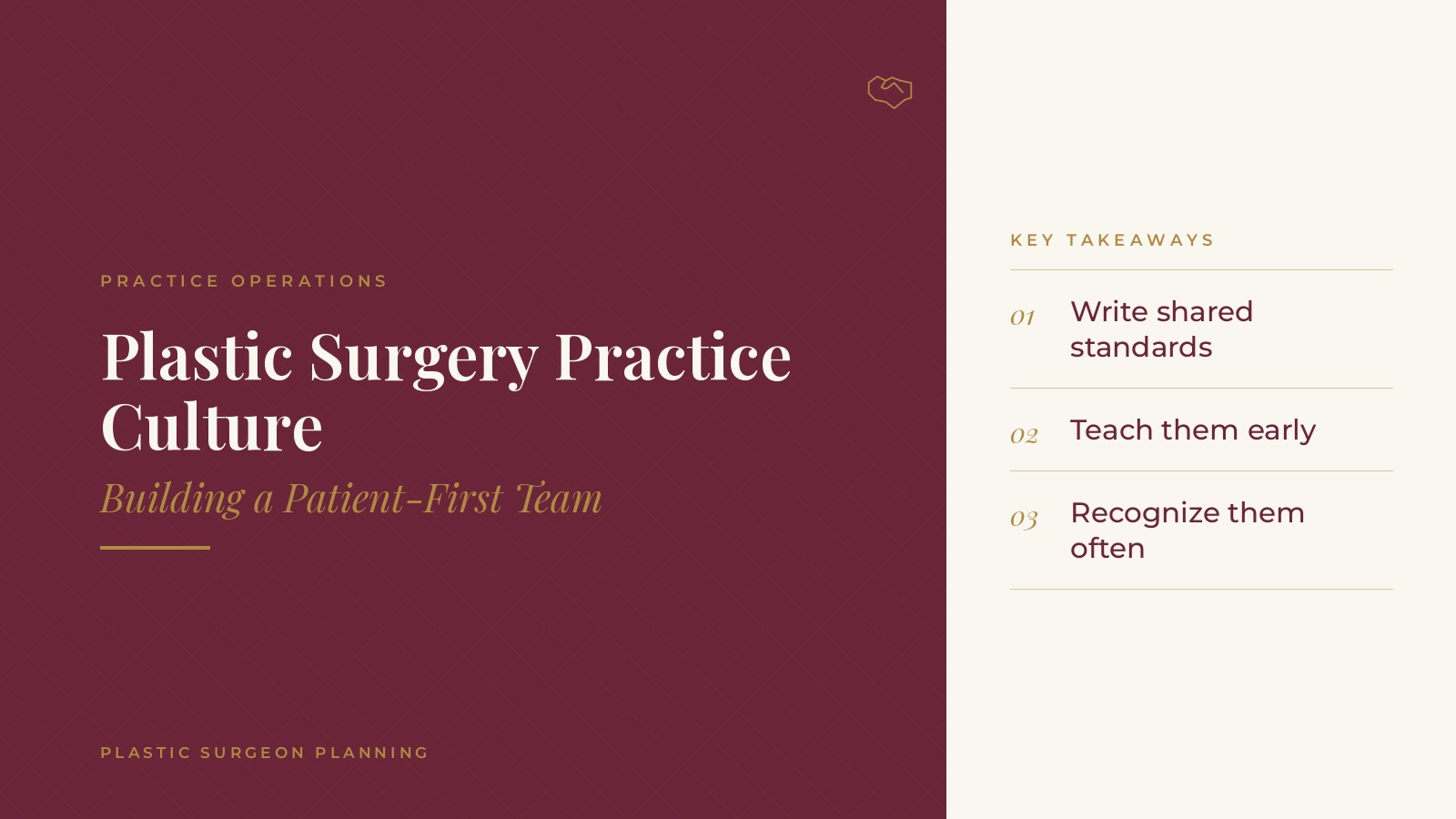
Plastic Surgery Practice Culture | Building a Patient-First Team
Plastic surgery practice culture is the shared set of habits, standards and expectations that shape how a team treats patients and each other every day. A patient-first culture shows up in small moments: how the phone is answered, how a consult room is prepared and how follow-up calls are handled.
In short, a strong plastic surgery practice culture usually rests on a few written service standards, onboarding that teaches them from day one, daily communication through short huddles, regular recognition and a simple way to check how patients experience the practice.
This guide from Plastic Surgeon Planning covers why culture matters, writing service standards, onboarding, daily communication, recognition, handling friction, checking progress and the questions practices often raise with a practice operations professional.
Key takeaways
- Culture is built from daily habits, not slogans.
- A few written service standards give the team a shared target.
- Onboarding is the first place standards are taught.
- Short daily huddles keep everyone aligned.
- Recognition and regular check-ins keep standards alive.
Why plastic surgery practice culture matters
Patients notice the whole team
People choosing an aesthetic practice meet the front desk, the patient coordinator, the nurses and the surgeon. A consistent, caring tone across every role builds confidence.
A steadier team
Teams that share clear expectations tend to work with less friction, which makes the practice a better place to work and helps keep skilled staff.
A smoother patient journey
When everyone follows the same standards, handoffs between consult, scheduling, surgery day and follow-up feel connected rather than pieced together.
Leaders set the tone
Surgeons and practice managers who follow the same standards they ask of the team, from greeting patients warmly to returning messages promptly, make those standards credible for everyone else.
Writing a short set of service standards
Keep the list short
Five to seven plain standards, such as returning every message the same business day or greeting every patient by name, are easier to remember than a long manual.
Make them observable
Standards work best when anyone can see whether they happened, such as a consult room prepared before the patient arrives or a follow-up call made on the planned day.
Build them together
Asking the team to help draft the standards gives each role a voice and makes the final list feel shared rather than handed down.
Revisit the list each year
A yearly review of the standards, with input from every role, keeps them current as services, systems and team members change.
Plastic Surgeon Planning can introduce you to independent practice operations professionals who work with plastic surgery practices on service standards, team routines and onboarding. To request an introduction, contact us or call or text (972) 616-4581. You can also read about plastic surgery practice operations.
Teaching standards through onboarding
Day one introductions
New team members review the service standards on their first day, with examples of what each one looks like in their role.
Shadowing with purpose
Shadow shifts with experienced staff show the standards in action at the desk, in consult rooms and on the phone.
Early check-ins
A short conversation at the end of the first and fourth weeks gives new staff a chance to ask questions and gives managers a chance to coach.
The plastic surgery staff onboarding guide covers the wider first weeks plan for new team members.
A written welcome guide
A short guide that lists the standards, key contacts, daily routines and where to find common forms gives new staff something to return to after the first busy week.
Daily communication habits
Morning huddles
A ten minute huddle reviews the day's schedule, any special patient needs and who is covering which role, so the team starts aligned.
Clear channels
Agreeing on which messages go through the team chat, which go through the practice management system and which need a quick conversation keeps information from getting lost.
End of day wrap-up
A brief check before closing confirms that messages have been returned and tomorrow's rooms and supplies are ready.
The plastic surgery team huddles guide offers a simple agenda for these daily meetings.
Shared language
Using the same plain terms for visit types, rooms and tasks across the front desk, clinical staff and coordinators cuts down on confusion during busy days and makes handoffs faster and more reliable for everyone.
Recognition that reinforces standards
Name the behavior
Specific thanks, such as noting a coordinator who stayed on the phone to walk a nervous patient through a pre-op visit, shows the team what the standards look like in practice.
Make it regular
A recognition moment in a weekly meeting or a shared thank you board keeps appreciation steady rather than saved for annual reviews.
Include every role
Recognition that reaches the front desk, sterile processing and billing staff as well as clinical roles reminds everyone that each role shapes the patient experience.
Ask the team what works
Some team members enjoy public thanks while others prefer a quiet word or a handwritten note. Asking during one to one meetings helps managers recognize people in a way that feels genuine.
Handling friction and checking progress
Address issues early
When a standard slips, a private, specific conversation soon after usually works better than a general reminder to the whole team.
Listen to the team
Regular one to one meetings and an open door for concerns help managers spot workload or process problems before they affect patients.
Use patient survey responses
Short patient surveys after consults and post-op visits show how the practice feels from the patient side. Recurring themes become topics for the next huddle.
The plastic surgery patient experience guide looks at the touchpoints that patients tend to notice most.
Share what is learned
Posting a short summary of survey themes and the changes made in response shows the team that their efforts and the patients' comments both lead somewhere.
Questions to raise with a practice operations professional
Standards questions
Practices often ask how to draft service standards, how many to start with and how to tailor them for each role.
Training questions
Other common topics include building standards into onboarding, structuring shadow shifts and running useful daily huddles.
Progress questions
A practice operations professional can help a practice choose a few signs of progress to watch, set up patient surveys and plan regular team check-ins.
Frequently asked questions
What is plastic surgery practice culture?
It is the shared set of habits, service standards and expectations that shape how a practice team treats patients and each other every day.
How many service standards should a practice have?
Many practices start with five to seven short, observable standards that every role can remember and apply.
How do new team members learn the practice culture?
Most practices introduce service standards on day one, show them through shadow shifts and follow up with check-ins in the first weeks.
What role do daily huddles play in practice culture?
A short morning huddle aligns the team on the schedule, patient needs and coverage, which supports consistent service through the day.
How can a practice tell whether its culture is improving?
Practices often watch patient survey themes, team check-in notes and whether standards such as same day message returns are met consistently.
Request an introduction
Plastic Surgeon Planning can introduce you to independent practice operations professionals who work with plastic surgery practices on team culture, service standards, onboarding and daily communication. Learn more about plastic surgery practice operations, then take the short Plastic Surgeon Planning Business survey and request an introduction. You can also call or text (972) 616-4581, or contact us. The form goes to [email protected].