
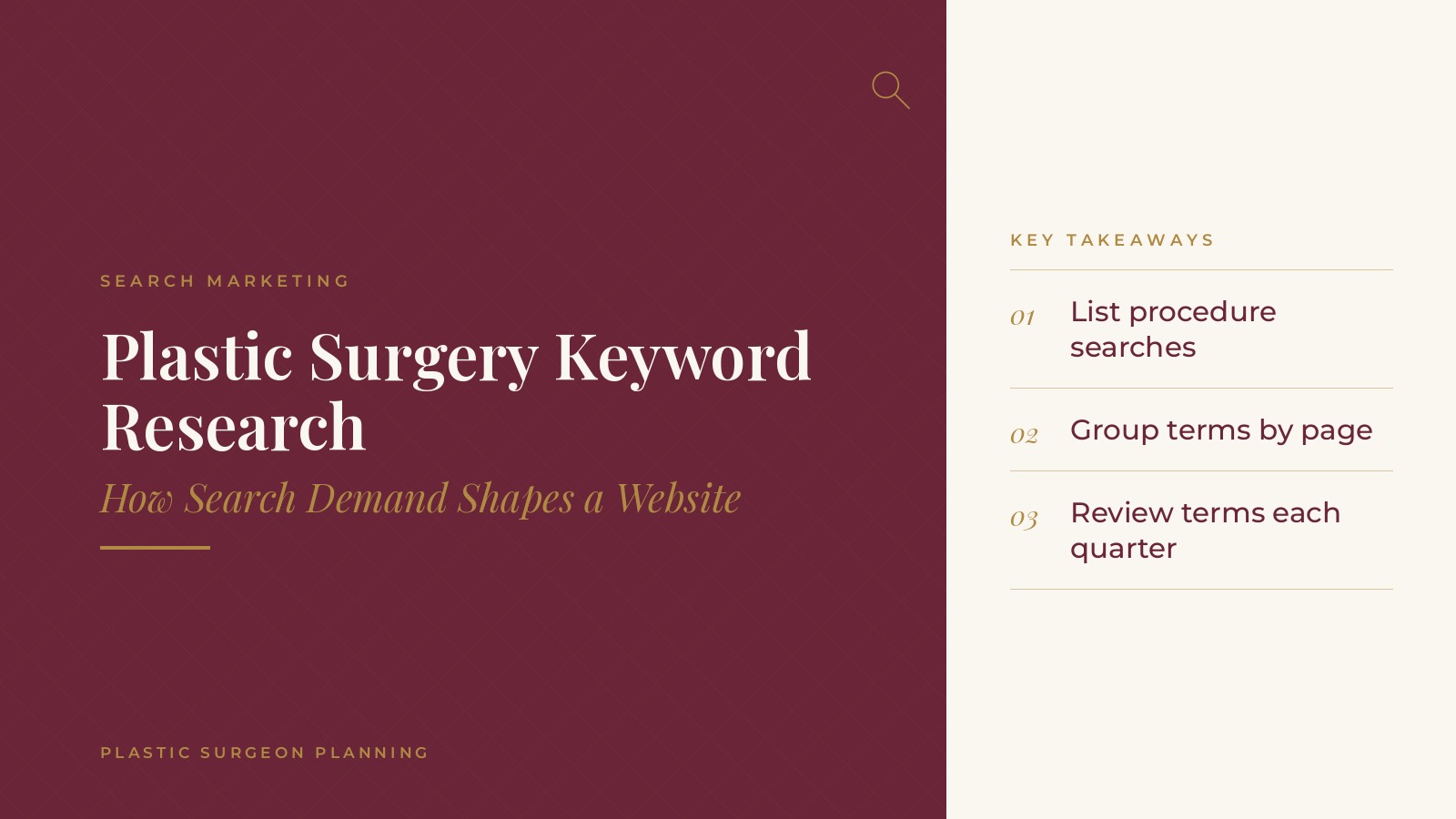
Plastic Surgery Keyword Research | How Search Demand Shapes a Website
Plastic surgery keyword research is the process of finding the words and phrases people type into search engines when they look for a procedure, a surgeon or answers to their questions. Those findings show which pages a practice website needs and what each page should cover. In short, plastic surgery keyword research works best when a practice lists the procedures it offers, gathers the searches people use for each one, sorts them into procedure, location and question searches, matches each group to one page and reviews the list every few months as interest shifts. This resource from Plastic Surgeon Planning explains the usual types of searches, how keywords are grouped and matched to pages, how research shapes content and the questions practices often bring to an SEO professional.
Key takeaways
- Start with the procedures the practice offers.
- Sort searches into procedure, location and question types.
- Match each keyword group to one page.
- Use question searches to plan FAQs and articles.
- Review the keyword list every few months.
What plastic surgery keyword research means
Words people actually use
Patients often search in everyday language. One person types a medical procedure name, another types a common nickname for it and a third types a question about recovery. Keyword research gathers those variations so the website speaks the same language.
Demand by procedure
Research also shows which procedures draw the most searches in the practice's area and which are searched less often. That helps a practice decide where to focus new pages first.
A foundation for SEO
Keyword research is the planning step behind most SEO work. The guide to plastic surgery SEO explains how those findings feed into procedure pages, supporting content and site structure.
Types of plastic surgery searches
Procedure searches
These name a procedure, such as rhinoplasty, breast augmentation, tummy tuck or facelift, along with the common nicknames people use for each one. They usually map to the main procedure pages.
Location searches
Searches that include a city, a neighborhood or the words near me show that the person wants a surgeon nearby. The guide to plastic surgeon near me SEO covers how practices appear for these searches.
Question searches
Questions about recovery time, what to expect at a consultation or how two procedures differ show what people want to understand before they reach out.
Surgeon and practice name searches
People who already know a surgeon search for that name, and those searches show how well the practice's name and surgeon profiles are known.
Plastic Surgeon Planning can introduce you to independent digital marketing professionals who work with plastic surgery practices on keyword research, procedure pages and search visibility. To request an introduction, contact us or call or text (972) 616-4581. You can also read about SEO for plastic surgeons.
How practices gather keyword ideas
Start with the procedure list
Most research begins with the full list of procedures and treatments the practice offers, grouped by face, breast and body, along with any nonsurgical services.
Listen to the front office
Patient coordinators and front desk staff hear the words callers use every day. A short list of common phrases from calls and consultation requests is a valuable source of ideas.
Use search tools
Keyword research tools show related searches, estimated search interest and seasonal patterns. A marketing professional can pull these reports and explain what the numbers mean for the practice.
Look at the search results
Searching each main keyword and reviewing the pages that appear shows what kind of content search engines and readers expect, such as detailed procedure pages, question pages or location pages.
Grouping keywords and matching them to pages
One topic per page
Keywords that mean the same thing, such as a procedure name and its common nickname, are grouped together and assigned to one page. That keeps two pages on the site from covering the same search.
Procedure, location and question pages
Procedure groups map to procedure pages, location groups to location or contact pages and question groups to FAQs and blog articles that link back to the main procedure page.
A simple keyword map
Many practices keep a spreadsheet that lists each page, its main keyword, related terms and the date it was last updated. That map makes it easy to see gaps and avoid overlap.
Using keyword research in content
Natural placement
The main keyword usually appears in the page title, the opening paragraph, a heading and the meta description. Related terms are worked in naturally, and the page is written for readers first.
Answering real questions
Question searches are a strong guide for FAQs and articles. The guide to plastic surgery content marketing explains how practices plan articles around those questions.
AI and conversational search
More people now ask full questions in AI assistants and voice search. Clear headings and direct answers help pages serve both regular and conversational search, as the guide to AI search for plastic surgeons describes.
Common keyword research mistakes
Chasing only the biggest terms
The most searched keywords are often the hardest to appear for. Practices often do well by also covering specific procedure variations and questions that fewer people search but that closely match what the practice offers.
Ignoring local wording
Neighborhood names, nearby towns and local phrasing matter for practices that draw patients from a defined area.
Letting the list go stale
Search interest shifts as new treatments appear and seasons change. A keyword list that is never reviewed slowly drifts away from what people are searching.
Reviewing keywords and questions to ask an SEO professional
What practices commonly review
Many practices review which keywords each page appears for, how visits to procedure pages change over time and which question searches are growing. A review every few months keeps the keyword map current.
Planning questions
- Which procedures should the first round of research cover?
- How will keywords be grouped and assigned to pages?
- Which question searches should become FAQs or articles?
- Who will keep the keyword map up to date?
- How often will the list be reviewed?
Keep the research with the practice
Many practices keep the keyword map, search tool reports and website accounts in the practice's own name, with outside professionals added as users.
Frequently asked questions
What is plastic surgery keyword research?
It is the process of finding the words and phrases people search when they look for a procedure, a surgeon or answers to their questions, then using them to plan website pages.
What types of searches matter for plastic surgery practices?
Common types include procedure searches, location searches, question searches and searches for a surgeon or practice name.
How are keywords matched to website pages?
Keywords with the same meaning are grouped together and assigned to one page, such as a procedure page, a location page or an FAQ.
Where do keyword ideas come from?
Ideas often come from the practice's procedure list, phrases callers use with the front office, search tools and a review of current search results.
How often should keyword research be reviewed?
Many practices review their keyword map every few months, since search interest shifts as treatments change and seasons pass.
Request an introduction
Plastic Surgeon Planning can introduce you to independent digital marketing professionals who work with plastic surgery practices on keyword research, SEO planning and website content. Learn more about SEO for plastic surgeons, then take the short Plastic Surgeon Planning SEO survey and request an introduction. You can also call or text (972) 616-4581, or contact us. The form goes to [email protected].



