
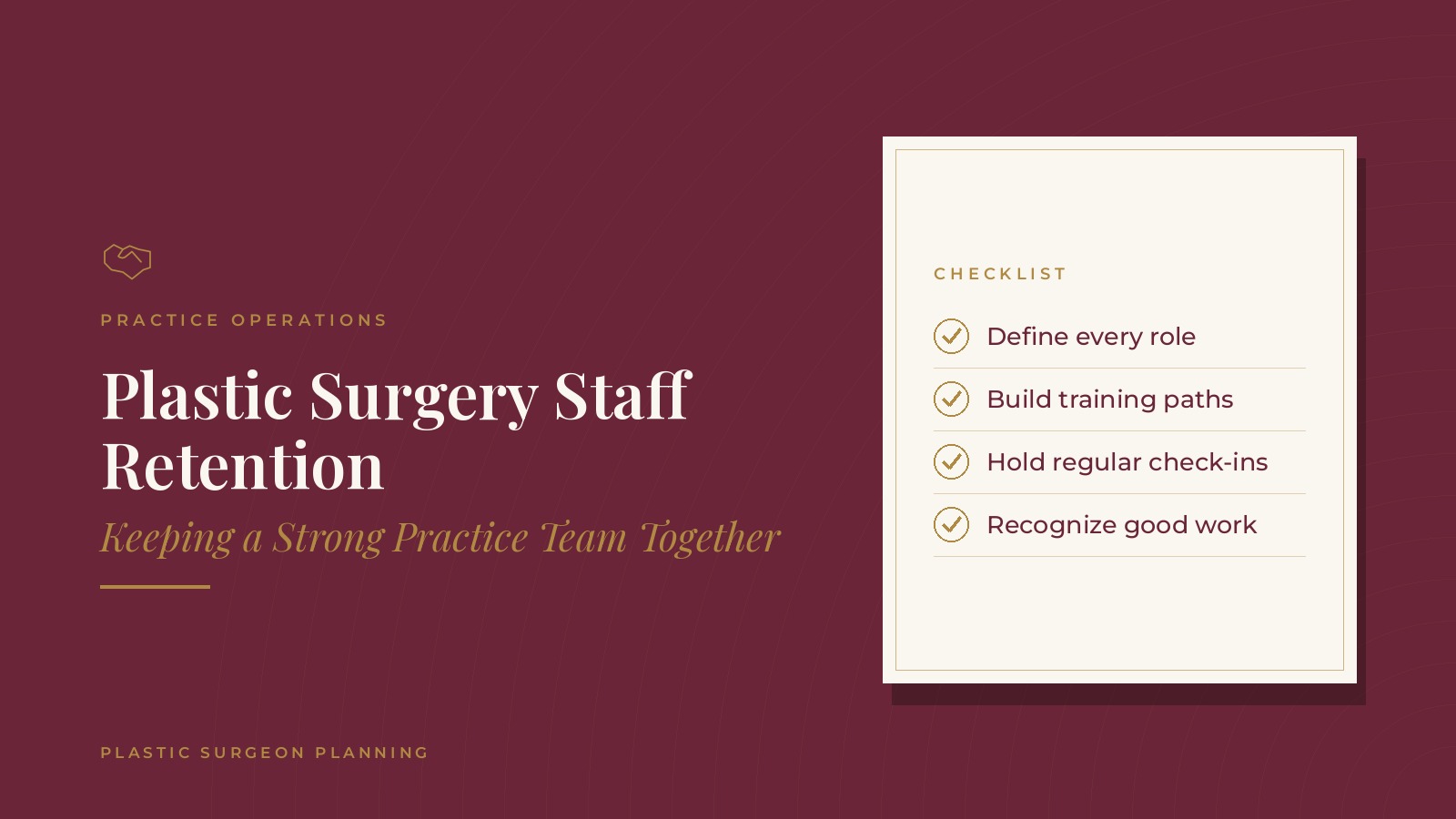
Plastic Surgery Staff Retention | Keeping a Strong Practice Team Together
Plastic surgery staff retention is the set of everyday practices that help a surgical practice keep its team together over time. It covers clear roles, thoughtful onboarding, training paths, steady team communication, workable schedules and regular conversations with each team member. In short, plastic surgery staff retention improves when every role is clearly defined, new hires are onboarded with a plan, team members can see how to grow, communication follows a regular rhythm and leaders check in with each person before small issues become reasons to leave. This resource from Plastic Surgeon Planning walks through the operational habits practices commonly use to support retention and the questions practices bring to independent practice operations professionals.
Key takeaways
- Define every role and its expectations.
- Onboard new hires with a written plan.
- Show each team member a training path.
- Keep team communication on a regular rhythm.
- Hold regular one-on-one check-ins.
Why plastic surgery staff retention matters
Experience is hard to replace
Patient coordinators, surgical staff and front desk team members learn the surgeon's preferences, the practice's systems and how patients like to be treated. When an experienced person leaves, that knowledge goes with them.
Patients notice continuity
Many patients interact with the same coordinator and staff from the first inquiry through follow-up visits. A familiar team makes that experience feel consistent.
Hiring takes time
Every departure starts a new round of hiring and training. The guide to plastic surgery hiring covers how practices approach that process, but keeping a strong team reduces how often it is needed.
Clear roles and expectations
Written role outlines
A short written outline for each role lists the main duties, who the person works with most and how success is recognized. It removes guesswork for new and current staff.
Clear handoffs
In a plastic surgery practice, work often passes between the front desk, the patient coordinator and the clinical team. Writing down who owns each step reduces friction and duplicate work.
Revisit as the practice grows
When the practice adds a service, a provider or a location, role outlines are updated so responsibilities stay clear. The guide to the plastic surgery front desk shows how one team's duties are commonly organized.
Plastic Surgeon Planning can introduce you to independent practice operations professionals who work with plastic surgery practices on team structure, onboarding, training paths and team communication. To request an introduction, contact us or call or text (972) 616-4581. You can also read about plastic surgery practice operations.
Onboarding that sets people up well
A plan for the first weeks
A written onboarding plan covering the first days, weeks and months gives new team members a clear picture of what they will learn and when.
A named buddy
Pairing each new hire with an experienced colleague gives them someone to ask everyday questions without feeling like a burden.
Tools ready on day one
Accounts, logins, a workspace and a printed schedule ready before the first day show new team members that the practice planned for their arrival. Small gaps, such as a missing login, can shape how a new hire feels about the first week.
Check-ins at set points
Short check-ins at the end of the first week, first month and third month let the practice catch problems early. The guide to plastic surgery staff onboarding covers how these plans are commonly built.
Training and growth paths
Skills by role
A simple list of the skills each role needs, from scheduling systems to patient communication, shows team members what they are building toward.
Cross-training
Training team members in a second role, such as front desk staff learning parts of the coordinator role, gives people variety and gives the practice coverage during absences.
Visible next steps
When team members can see how a role might grow, such as moving into a lead or trainer position, they have a reason to build their future inside the practice.
Time set aside for learning
Many practices schedule short training blocks during quieter weeks, so learning does not depend on finding spare minutes during busy clinic days.
Team communication and huddles
Daily huddles
A short huddle at the start of the day reviews the schedule, surgeries, special requests and who is covering what. The guide to plastic surgery team huddles explains how practices run them.
Regular team meetings
A monthly team meeting gives space to discuss process changes, upcoming events and ideas from staff.
Two-way communication
Retention improves when team members feel heard. Asking for input on schedules, tools and workflows, and following up on what was raised, shows that feedback matters.
Schedules, workload and recognition
Predictable schedules
Posting schedules well in advance and keeping changes to a minimum helps team members plan their lives outside work.
Balanced workload
Watching for roles that are consistently overloaded, such as a coordinator handling more inquiries than the day allows, lets the practice adjust before burnout sets in.
Specific recognition
Thanking people for specific work, in team meetings or one-on-one, tends to mean more than general praise. Small, regular recognition often matters as much as occasional larger gestures.
Coverage plans
A simple plan for vacations, sick days and surgery-heavy weeks, with cross-trained backups for each key role, keeps the load from falling on the same people every time. Sharing that plan with the team ahead of time helps everyone know who is covering what.
Stay conversations and questions to ask a practice operations professional
What a stay conversation is
A stay conversation is a regular one-on-one check-in where a leader asks what the team member enjoys, what frustrates them and what would make them more likely to stay. It happens while the person is still engaged, not after they decide to leave.
Planning questions
- Are role outlines and handoffs written down for every position?
- What does the onboarding plan include, and who owns it?
- Which training paths and cross-training options can the practice offer?
- How often are huddles, team meetings and one-on-one check-ins held?
- How is turnover tracked and reviewed over time?
Track turnover simply
Many practices keep a short record of start dates, departures and the reasons people gave for leaving, reviewed once or twice a year. Patterns in that record often point to the role, schedule or process that needs attention first.
Frequently asked questions
What is plastic surgery staff retention?
It is the set of everyday practices, such as clear roles, onboarding, training, communication and regular check-ins, that help a practice keep its team over time.
Why do clear roles help retention?
Written role outlines and handoffs remove guesswork, reduce friction between teams and help each person understand how their work is recognized.
What is a stay conversation?
It is a regular one-on-one check-in where a leader asks a team member what they enjoy, what frustrates them and what would help them stay.
How does cross-training support retention?
Cross-training gives team members variety and growth while giving the practice coverage when someone is out.
How often should practices check in with staff?
Many practices hold short daily huddles, a monthly team meeting and regular one-on-one check-ins with each team member.
Request an introduction
Plastic Surgeon Planning can introduce you to independent practice operations professionals who work with plastic surgery practices on team structure, training and practice operations. Learn more about plastic surgery practice operations, then take the short Plastic Surgeon Planning Business survey and request an introduction. You can also call or text (972) 616-4581, or contact us. The form goes to [email protected].



