
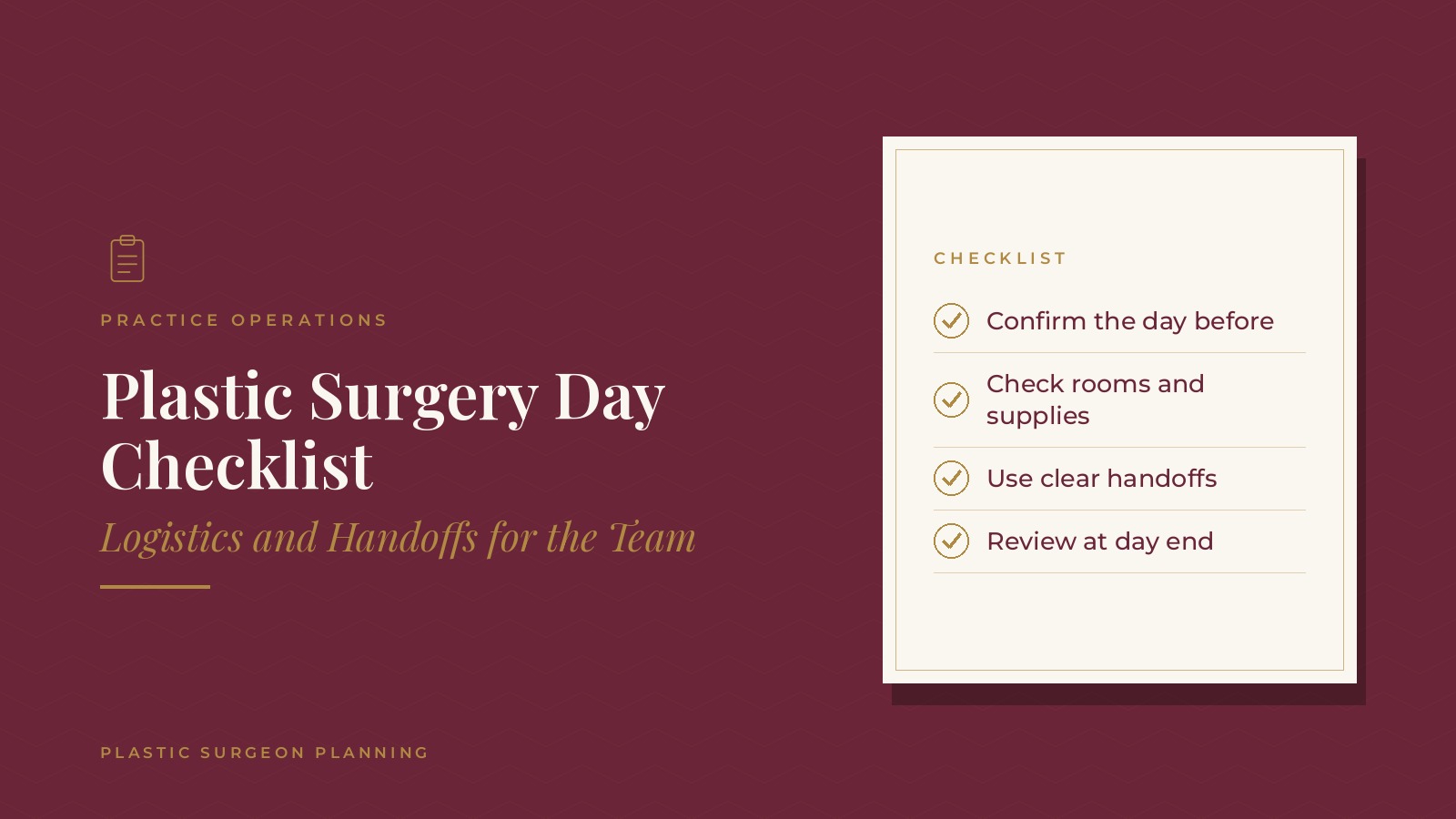
Plastic Surgery Day Checklist | Logistics and Handoffs for the Team
A plastic surgery day checklist is a written list of the operational steps a practice follows before, during and after a day of procedures, covering confirmations, arrival flow, room and supply readiness, team handoffs and the end of day review. It sits alongside the clinical protocols the surgical team already uses and focuses on logistics.
In short, a plastic surgery day checklist tends to work best when confirmations happen the day before, arrival times and roles are clear, rooms and supplies are checked early, handoffs between the front office, coordinators and the surgical team follow a set routine and the team reviews the day before everyone leaves.
This resource from Plastic Surgeon Planning explains why practices use a surgery day checklist, what the day before often includes, how arrival and room readiness are organized, how handoffs work and the questions practices often bring to a practice operations professional.
Key takeaways
- Confirm patients and schedules the day before.
- Set clear arrival times and roles.
- Check rooms and supplies early.
- Use a set routine for each handoff.
- Review the day before the team leaves.
Why a plastic surgery day checklist matters
Many moving parts
A procedure day brings together the front office, patient coordinators, the surgical team and the people who drive patients home. A missed step in any group can delay the whole schedule.
Less reliance on memory
A written checklist means the day runs the same way whether the most experienced coordinator is in the office or out.
A calmer experience for patients
When arrival, waiting and pickup steps are organized, patients and their companions feel looked after. The plastic surgery patient experience guide covers that wider picture.
The day before
Confirmations
Coordinators usually confirm each patient's arrival time, the person driving them home and that pre-visit instructions written by the surgical team were received.
Schedule review
A short review of the next day's schedule with the surgeon and team leads checks the order of cases, room assignments and any special equipment.
Paperwork ready
Required forms and documents for each patient are prepared and checked for completeness, following the practice's existing clinical process.
Contact list
An up to date contact list for the day, including the surgical facility, on-call staff and key vendors, is printed or shared.
Checking the facility and vendors
If cases take place at an outside surgical facility, coordinators often confirm start times and room bookings with that facility. Any rented equipment or vendor representatives expected that day are confirmed too.
Plastic Surgeon Planning can introduce you to independent practice operations professionals who work with plastic surgery practices on surgery day logistics, team handoffs and daily checklists. To request an introduction, contact us or call or text (972) 616-4581. You can also read about plastic surgery practice operations.
Arrival and check-in flow
Staggered arrival times
Spacing arrival times to match the case order keeps the waiting area calm and avoids a crowd at check-in.
A clear check-in point
Patients and companions know where to go, who will greet them and where companions can wait or how they will be contacted.
Companion communication
Many practices agree on how companions receive updates and pickup times, such as a text message or a phone call, so the front desk is not fielding repeated questions. The plastic surgery patient communication guide covers common message habits.
Room and supply readiness
Early room checks
Team members often check each room at the start of the day for the equipment, linens and supplies listed for that case.
Supply par levels
A simple list of the items each case type uses, with expected counts, makes it easier to spot gaps before the first case.
Turnover between cases
A set routine for resetting rooms between cases keeps the schedule moving. The plastic surgery operating room turnover guide explains how practices often organize that work.
Recovery area readiness
The recovery or discharge area is checked early as well, with seating for companions, written aftercare packets prepared by the surgeon and a clear path to the pickup point. A named team member often owns this area for the day, so questions from companions go to one person.
Team handoffs
Front office to coordinator
Check-in staff pass each arrival to the coordinator or clinical team with a short, standard confirmation, so nothing is assumed.
Coordinator to surgical team
Coordinators confirm that paperwork, companion details and pickup plans are complete before the surgical team takes over, following the team's clinical protocols.
Surgical team to discharge
At the end of each case, the team confirms the pickup time with the companion and hands off written aftercare materials prepared by the surgeon.
A shared status board
Many practices use a simple whiteboard or screen showing each patient's stage, so everyone sees where the day stands.
The end of day review
A short huddle
A five to ten minute huddle at day end covers what went well, what caused delays and any follow-up calls scheduled for the next morning.
Restocking and notes
Supplies used are noted for reordering, and any equipment issues are logged for repair.
Updating the checklist
When the team finds a missed step, the checklist is updated so the next surgery day benefits.
Next morning follow-ups
Many practices list the routine check-in calls or messages scheduled for the next day, along with who will make them. The plastic surgery patient follow-up guide covers how those routines are often organized.
Questions practices bring to a practice operations professional
Common planning questions
- Which steps belong on the day before list versus the surgery day list?
- Who owns each handoff, and who covers when that person is out?
- How do companions receive updates and pickup times?
- How will the practice track delays and their causes?
Fitting with clinical protocols
A surgery day checklist covers logistics and works alongside, not in place of, the clinical protocols set by the surgeon and the surgical facility.
Keeping records in the practice's name
Many practices keep checklists, status boards and scheduling tools in practice accounts, with outside professionals added as users.
Frequently asked questions
What is a plastic surgery day checklist?
It is a written list of operational steps for a procedure day, covering confirmations, arrival flow, room readiness, team handoffs and the end of day review.
What happens the day before surgery?
Coordinators usually confirm arrival times, companions and receipt of pre-visit instructions, and the team reviews the case order and room assignments.
How do practices keep companions informed?
Many agree on a set method, such as a text message or phone call, for sharing updates and pickup times with companions.
Does the checklist replace clinical protocols?
No. It covers logistics and works alongside the clinical protocols set by the surgeon and the surgical facility.
Why hold an end of day review?
A short huddle captures delays, restocking needs and missed steps so the checklist can be improved before the next surgery day.
Request an introduction
Plastic Surgeon Planning can introduce you to independent practice operations professionals who work with plastic surgery practices on surgery day checklists, team handoffs and daily operations reviews. Learn more about plastic surgery practice operations, then take the short Plastic Surgeon Planning Business survey and request an introduction. You can also call or text (972) 616-4581, or contact us. The form goes to [email protected].



